Nature’s canvas is ever-changing, painted by the strokes of primary and secondary succession. These ecological phenomena unveil the captivating narratives of adaptation and growth in response to environmental shifts. In this article, we’ll explore the dynamic concepts of primary and secondary succession, supported by real-life instances that underscore the remarkable resilience of our natural world.
Primary Succession: Nature’s First Steps
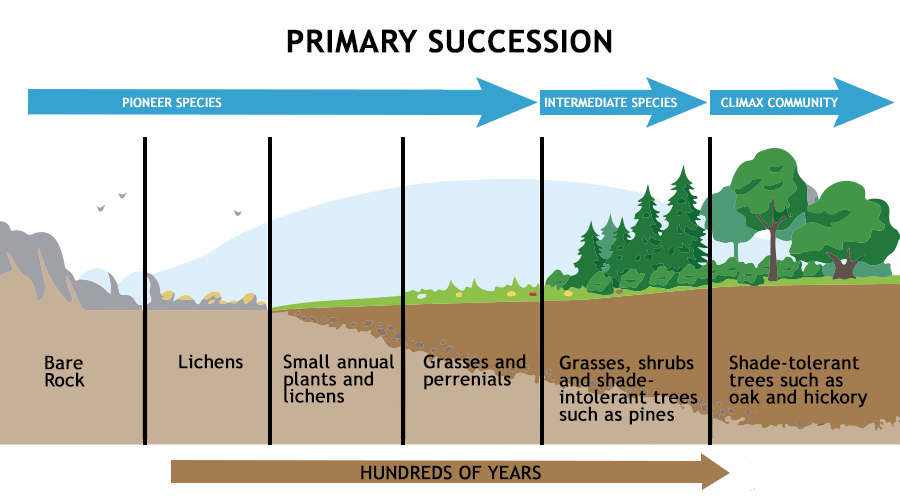
Imagine a barren landscape devoid of life – the stage set for primary succession. This gradual process commences in areas lacking soil, where pioneer species like lichens and mosses arrive. Over time, they break down rock surfaces, gradually forming the foundation of soil. This hospitable ground encourages the growth of grasses, shrubs, and eventually trees. A quintessential example of primary succession is the rebirth of land following a volcanic eruption. Mount St. Helens, for instance, emerged as a beacon of primary succession, transitioning from desolation to lush habitat over decades.
Secondary Succession: Nature’s Remarkable Recovery
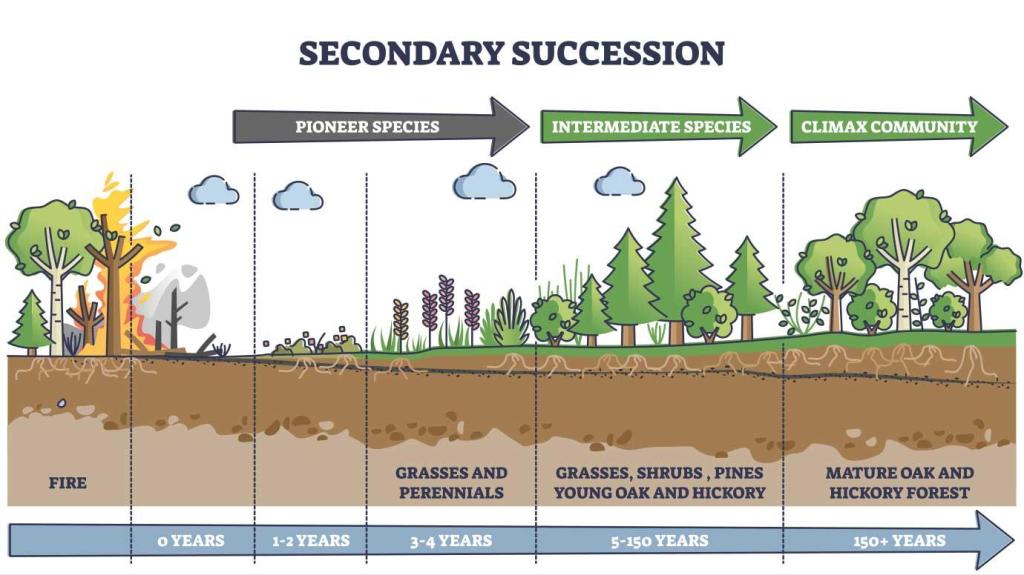
In contrast, secondary succession occurs on previously inhabited terrain that has been disturbed by events like fires, deforestation, or farming. Here, remnants of life remain, facilitating a swifter regeneration. Grasses, shrubs, and small plants swiftly return, attracting insects and animals that assist in the revival. An iconic instance of secondary succession is the aftermath of a forest fire. The resurgence of plant life and the return of wildlife exemplify the natural world’s ability to heal and rejuvenate.
Lessons from Nature’s Choreography
Primary and secondary succession stories mirror nature’s resilience and adaptability. They underscore life’s tenacity and its ability to thrive in the face of challenges. Additionally, they illuminate the delicate balance of ecosystems and the intricate relationships that weave them together. These narratives of renewal and regrowth serve as poignant reminders of nature’s boundless strength.
Embracing the Wisdom of Change
In the grand theater of nature, primary and secondary succession take center stage, narrating tales of transformation and rebirth. They echo the cycle of life, demonstrating that even amidst devastation, there exists potential for resurgence. From volcanic aftermaths to post-fire forests, these real-life examples underscore the inherent capacity of nature to adjust, recover, and flourish anew. Observing these processes invites us to appreciate the intricate tapestry that sustains our planet’s diverse ecosystems.

 Biology Eye